Brain-inspired devices · circuits · AI

Engineering efficient intelligence from sensors to systems.

We develop neuromorphic devices, circuits, and sensor systems that process information more like the nervous system: event-driven, adaptive, compact, and energy-efficient.

fJ Target energy scale for compact spiking neurons
SNN Event-driven learning and inference at the edge
AI × HW Co-design across materials, devices, circuits, and algorithms

Adaptive spiking response

AFe / Fe devices CMOS neurons Tactile sensing Edge AI
Research themes

Hardware-native intelligence for physical-world AI.

Our research connects emerging nanoelectronic devices with neuromorphic circuits, event-driven sensing, and spiking neural networks.

µ

Neuromorphic devices

Ferroelectric and antiferroelectric transistors for compact neurons, adaptive dynamics, low-energy switching, and CMOS-compatible integration.

Brain-like circuits

Circuit-device co-design of spiking neurons and synaptic interfaces that support leakage, integration, reset, adaptation, and dynamic thresholds.

Neuromorphic sensing

Tactile and wearable sensing systems that transform rich physical signals into sparse, event-driven representations for robotics and health.

Spiking neural networks

Efficient SNN algorithms and benchmarks for classification, perception, sensor fusion, and edge deployment.

Digital biomarkers

Wearable and AI-assisted measurements for gait, rehabilitation, early disease detection, and longitudinal monitoring.

Sustainable intelligence

Low-carbon materials, self-powered sensors, and event-driven edge AI for sustainable manufacturing and energy-aware computing.

Our approach

Co-design from material physics to system behavior.

We do not treat devices, circuits, and algorithms as isolated layers. Instead, we use cross-layer co-design: physical device dynamics become useful computational primitives; circuits exploit those dynamics; algorithms are adapted to the hardware; and system-level benchmarks quantify efficiency, latency, and robustness.

01

Materials and device dynamics

Tune hysteresis, steep-slope behavior, volatility, leakage, relaxation, endurance, and variability.

02

Compact neuromorphic circuits

Map device physics into spiking neuron functions with minimal area and energy overhead.

03

Event-driven sensing

Encode touch, motion, gait, and manufacturing signals as sparse temporal events.

04

System validation

Benchmark SNN accuracy, energy per inference, latency, robustness, and deployability.

Selected projects

Building blocks for embodied and edge AI.

Edit the project names, funders, and dates directly in this file as your group evolves.

Flagship direction

Brain-like artificial neurons with circuit-device co-design

Developing compact antiferroelectric/ferroelectric transistor-based neuron circuits that combine efficiency, rich neuronal dynamics, and scalability for high-efficiency SNNs.

AFe-NCFET Adaptive LIF Dynamic threshold Energy-efficient SNNs

Neuromorphic tactile systems

Artificial tactile perception for robotic and prosthetic systems using sensors, spiking encoders, and hardware-aware learning.

AI-driven digital biomarkers

Wearable sensing and machine learning for gait analysis, rehabilitation monitoring, and early detection of abnormal trajectories.

Low-carbon sensing–intelligence–control

Cellulose/lignin-based self-powered sensors coupled to edge AI for sustainable process monitoring and optimization.

Publications

Selected outputs.

Replace placeholders with DOI links, Google Scholar links, or your university publication database entries.

Science · 2024

Neuromorphic tactile system for artificial touch perception

Selected publication · tactile sensing · neuromorphic processing · embodied AI.

Link
Nano Energy

Artificial tactile system with receptive-field-inspired sensing

Selected publication · sensor arrays · artificial neurons · spatial resolution.

Link
Add more

Publication title, authors, journal, year

Use this block for your latest papers, preprints, datasets, and open-source code.

Link
News

Latest from the lab.

Keep this section active with grants, papers, conference talks, student achievements, and open calls.

2026

New research group homepage launched

A clean starting point for sharing research themes, publications, open positions, and collaboration opportunities.

Add date

New paper, grant, award, or talk

Replace this placeholder with a short, specific update.

Team

People.

Add photos, student projects, alumni, and collaborator logos as the group grows.

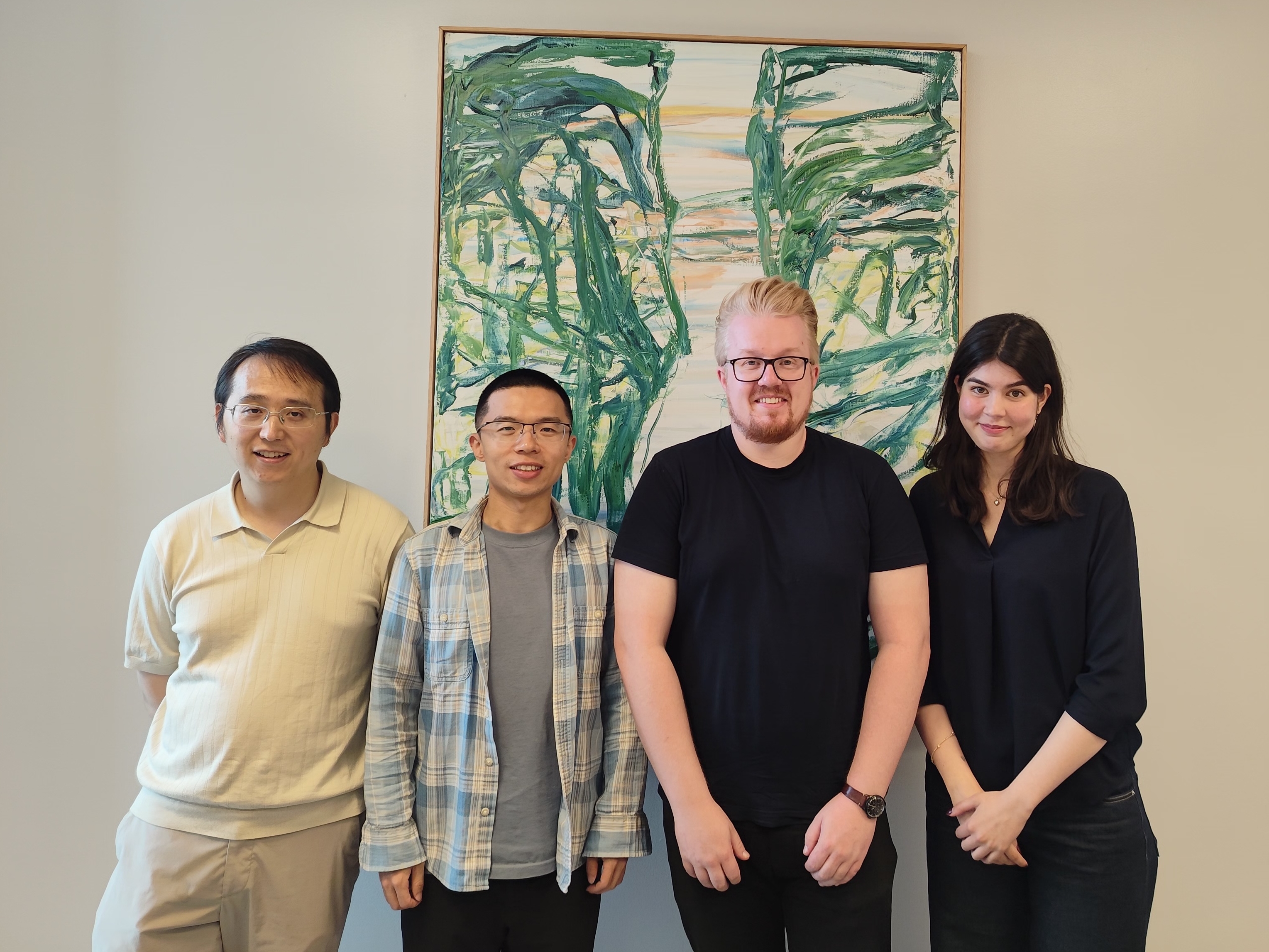
Libo Chen

Assistant Professor · Department of Electrical Engineering · Uppsala University

Neuromorphic circuits Emerging devices Tactile AI
PhD students and postdocs We welcome motivated candidates in neuromorphic devices, CMOS circuits, SNNs, wearable sensing, and edge AI.
Master thesis projects Possible topics include spiking neuron modeling, tactile data processing, digital biomarkers, and neuromorphic sensor systems.
Collaborators We collaborate across electrical engineering, materials science, robotics, AI, clinical research, and sustainable manufacturing.
Contact

Interested in collaboration?

We are open to academic and industrial collaborations in neuromorphic hardware, embodied AI, wearable sensing, digital biomarkers, and sustainable edge intelligence.